
Not sure how to set-up a bunny-friendly litter box? Learn the basics, below, and help your bunny on his way to successful litter box training.
Plastic Cat Pan
Basic plastic cat litter pans work best for bunny’s litter box. They come in sizes small, medium, large, and giant, and can be found at stores such as Target, Wal-Mart, and Kmart, for a nominal price. We recommend sticking to the medium, large, or giant litter pans for most bunnies, unless your bunny is very tiny. However, you can’t go wrong with a larger litter box that your bunny can grow into. Choosing the size of pan to buy, will depend on the size of your bunny. 
XLarge Cat litter box for bunnies under 7 lbs.
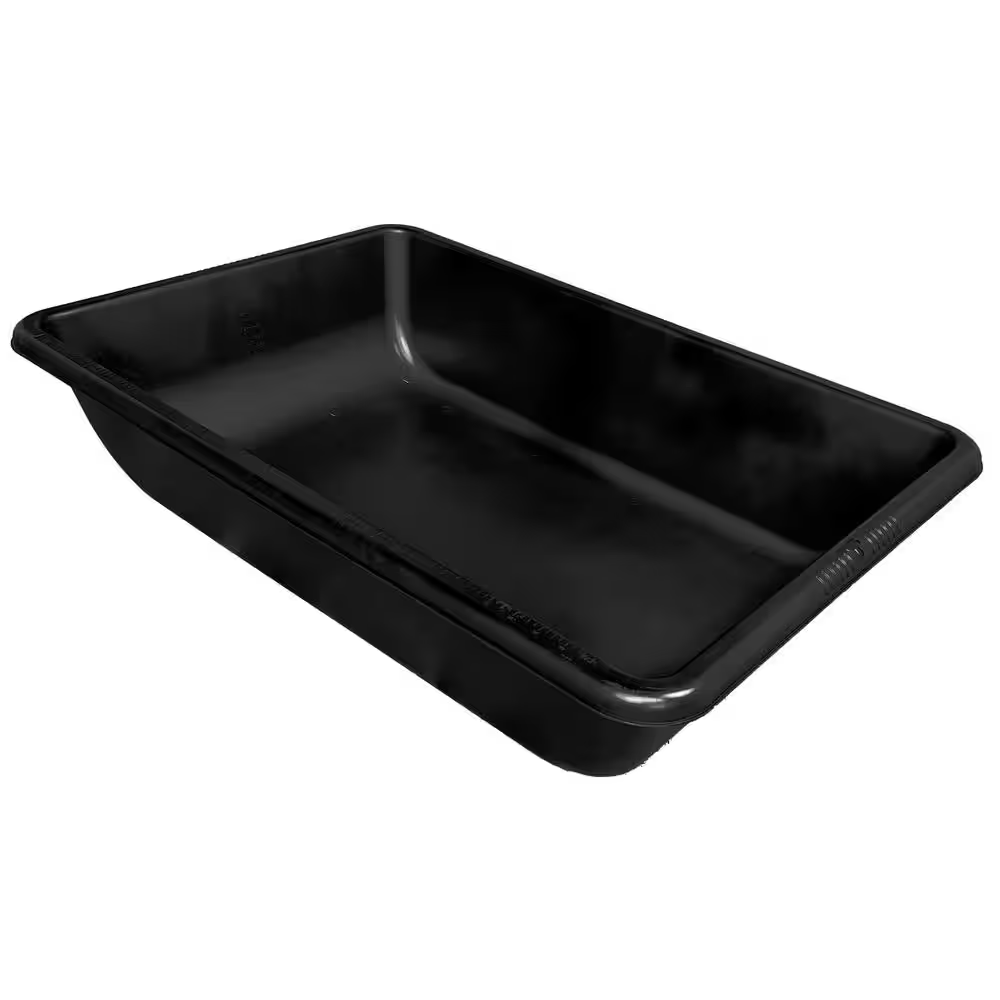
Giant mortar mixing pan from Home Depot, for large bunnies over 8 pounds, or bonded pairs.
If you prefer, you can give the bunnies multiple smaller boxes to keep them well supplied with hay and fresh litter.
Setting-up the Litter Box
We recommend using CareFresh or wood pellet bedding and fresh hay to prepare your bunny’s litter box. CareFresh is a bunny-safe pet bedding that is also environmentally friendly. Fresh hay in the box entices bunny to jump in and do his “business”.

A clean box with about 1 inch of clean CareFresh or wood pellets covering the bottom.
Next, add a BIG handful of hay. Here, we’ve spread some grass hay over the bedding of choice, then added a nice bunch of oat hay at the “kitchen” end of the box, giving bunny a combination of oat and grass hay to nibble. About 12 hours later, here’s a well-used box. You can see that bunny has created a “bathroom” end and a “kitchen” end (the end with remaining clean hay).

Keep a Fresh Box
Change bunny’s box frequently, to ensure a clean, fresh box. This will prevent bunny from heading to cleaner places to eliminate. If your bunny does not soil his box completely within a 24-hour period, simply add another large handful of hay to the “kitchen” end, to replenish his supply. But never go for more than two days before giving bunny a fresh litter box.
Once dirty, dump the entire contents of the box into your “yard waste” container or regular trash, to dispose. (If you’re a gardener, bunny’s litter box waste makes great compost!) Wash the box, and if urine build-up occurs, pour in some plain white vinegar to soak it clean. Rinse, wipe dry, then add new CareFresh and hay.
Bunnies Enjoy Their Litter Boxes
Once introduced and used to being given fresh hay in a clean box, your bunny will grow to love it! He will nibble hay nearly 24 hours a day – important for good bunny digestion – and may even burrow under it searching for the most choice bits.

Finally, it’s important to remember to use bunny-safe litters in your bunny’s box. Clay, or clumping litters for cats can be dangerous to bunnies who may ingest some of their litter while eating hay. Pine, cedar, or other aromatic wood shavings may also be harmful to bunny’s health. Pine pellets are safe as they have been kiln dried, which removes the harmful fumes. Sticking with a simple, paper-based, recyclable litter provides bunny with a safe litter and one that’s also environmentally friendly.